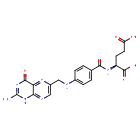
Folic acid is a nutrient used to treat megaloblastic anemia and is found in many supplements. Folic acid, also known as folate or Vitamin B9, is a member of the B vitamin family and an essential cofactor for enzymes involved in DNA and RNA synthesis.
- Mechanism
- Curator reviewed
Folic acid, as it is biochemically inactive, is converted to tetrahydrofolic acid and methyltetrahydrofolate by dihydrofolate reductase (DHFR). These folic acid congeners are transported across cells by receptor-mediated endocytosis where they are needed to maintain normal erythropoiesis, synthesize purine and thymidylate nucleic acids, interconvert amino acids, methylate tRNA, and generate and use formate. Using vitamin B12 as a cofactor, folic acid can normalize high homocysteine levels by remethylation of homocysteine to methionine via methionine synthetase.
- Primary indication
- Folic acid is indicated for the treatment of folic acid deficiency, megaloblastic anemia, and in anemias of nutritional origins, pregnancy, infancy, or childhood.Curator reviewed · 16 structured indications
- Formula / weight
- C19H19N7O6 · 441.3975 g/mol (avg)
- First approval
- Canada, 1996 · United States, 1971
- Also known as
- Folacin · Folate · Folic-acid · Vitamin B-9 · Vitamin B9
- Code names
- NSC-3073
- Brand names
Resolves to
OVBPIULPVIDEAO-LBPRGKRZSA-NSMILESNC1=NC(=O)C2=NC(CNC3=CC=C(C=C3)C(=O)N[C@@H](CCC(O)=O)C(O)=O)=CN=C2N1What you can answer from here — as of September 23, 2026
Which drugs share a target with Folic acid, and which of those have an active Phase 3 trial?
Create a free account or log in to explore the full data card.
Create Account